Silicone Foam vs Solid Silicone: When Closed-Cell Foam Is the Right Choice
Read:10
Solid silicone is the right answer for most consumer products — but for cushioning, sealing against uneven gaps, and lightweight padding, closed-cell silicone foam outperforms it decisively. The practical conclusion for buyers: the choice is not material quality, it is function. Specify foam where softness must survive repeated compression, and solid silicone where tear strength, surface finish or food contact drive the design.
What silicone foam actually is
Silicone foam is made by introducing a blowing agent or foaming process into the compound during curing, producing a controlled population of closed cells — tiny sealed bubbles — throughout the part. Closed-cell structure is the defining feature: each cell is sealed, so the material resists water absorption and recovers after compression. Open-cell sponge, by contrast, absorbs water like a kitchen sponge and is a different product for different jobs. In production, foam behaves differently from solid compound: cure conditions and foaming must be balanced together, which is why foamed parts demand more process control and a supplier who has run the material before.
Property comparison at a glance
The table summarises industry-typical behaviour. Exact values depend on density and formulation; treat them as orientation, not guarantees.
| Property | Solid silicone | Closed-cell silicone foam |
|---|---|---|
| Density | 1.1–1.3 g/cm³ | 0.3–0.8 g/cm³, density-graded |
| Hardness feel | Shore A 10–80, tunable | No Shore scale; described by compression force deflection |
| Compression behaviour | Firm; recovers well but transmits force | Cushions; spreads load, excellent recovery |
| Tear and abrasion resistance | Strong | Lower; skin can scuff on rough surfaces |
| Water sealing | Excellent as a gasket material | Good splash resistance; not for pressure sealing |
| Thermal insulation | Moderate | High, thanks to trapped gas cells |
| Surface detail / print | Sharp detail, printable | Soft skin, limited fine detail |
| Typical cost driver | Material weight | Process control; material weight lower per volume |
Where each material wins, by application
| Application | Better choice | Reason |
|---|---|---|
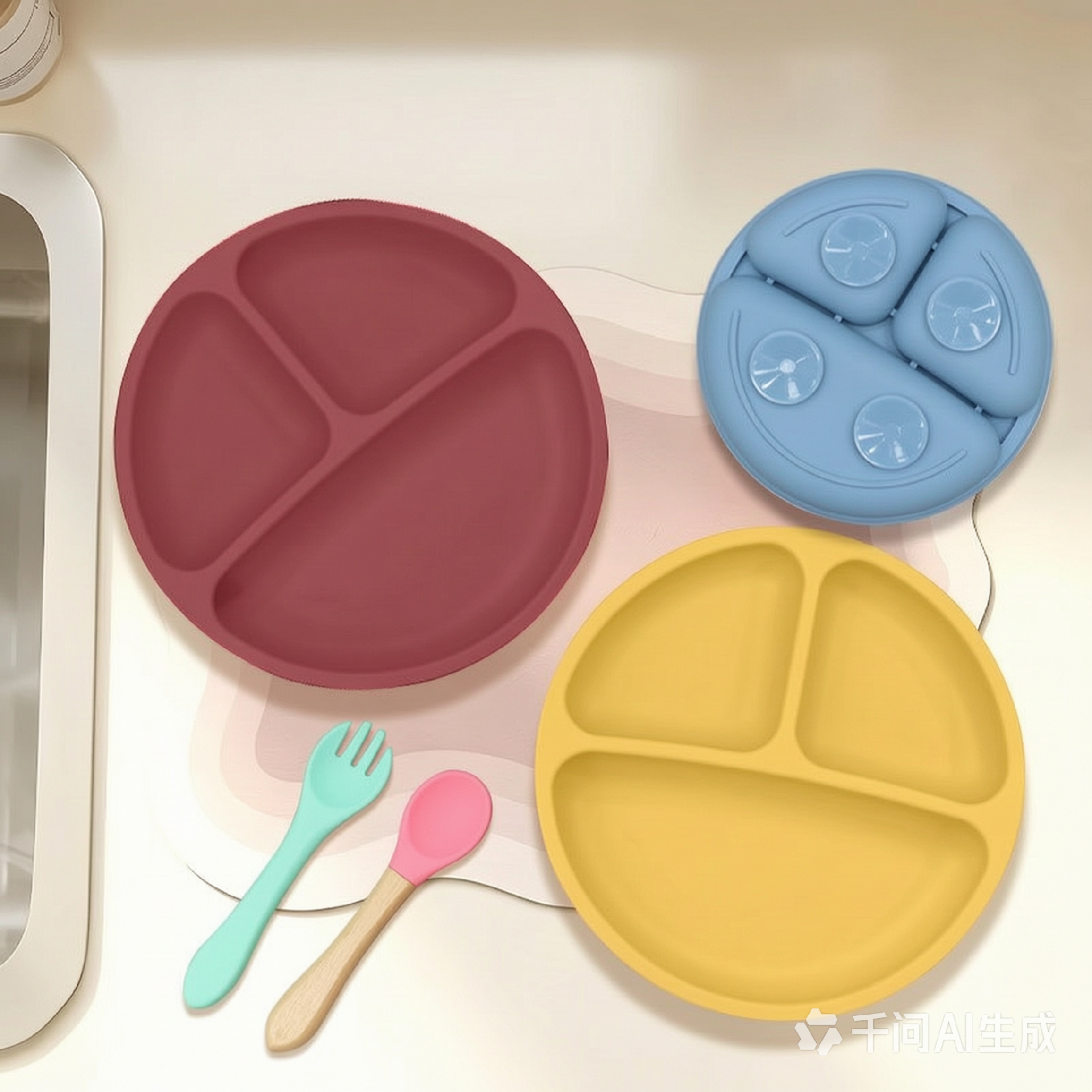
| Bakeware, spatulas, baby tableware | Solid silicone | Food-contact surfaces, tear strength, cleanability |
| Travel case inserts, protective liners | Closed-cell foam | Shock absorption at low weight |
| Camera, electronics and glass padding | Closed-cell foam | Conforms to uneven gaps, dampens vibration |
| Car cup-holder mats, dash pads | Either, by design brief | Foam for cushion feel; solid for wipe-clean surfaces |
| Outdoor seat cushions and kneeling pads | Closed-cell foam | Does not absorb water, insulates from cold ground |
| Pet bowls, chew toys, leashes | Solid silicone | Chew resistance and washability |
How to specify foam correctly
Foam is not ordered by "hardness" the way solid silicone is. The specification language changes, and using the wrong vocabulary invites the wrong material. Ask for these parameters instead:
- Density in g/cm³ — the primary lever on feel and cost. Low-density foam feels softer and insulates better but scuffs sooner.
- Compression force deflection (CFD): the force needed to compress the foam a set percentage, the foam equivalent of a hardness number. State the test method.
- Cell structure: closed-cell explicitly, with water absorption as a verification check.
- Compression set: foam also relaxes over time; the same ASTM/ISO set tests apply and matter more than for solid parts.
- Skin quality: whether a continuous outer skin is required, which affects appearance and cleanability.
Cost and production considerations
Foam parts are frequently lighter per unit volume, which offsets part of the higher process cost, but the real premium lies in process control: foaming windows are narrow, and density drifts show up as feel differences between batches. For consumer goods, this makes golden-sample control more important than for solid parts — approve a density reference sample and require batch-to-batch comparison against it. Also plan tolerances realistically: foamed sections expand and relax slightly after demoulding, so critical gaps should be toleranced after a defined stabilisation period, not straight off the press.
Common sourcing mistakes
- Specifying foam by Shore hardness. Shore durometers read solid surfaces; on foam they measure the skin, not the cushion. Insist on CFD and density.
- Using foam where it will be rubbed or bitten. Foam skins abrade and tear; pet toys and baby teethers belong in solid silicone.
- Expecting print detail on foam. Pad printing and fine debossing lose definition on soft cellular surfaces; plan bolder artwork.
- Assuming foam is always cheaper. It can be — lower material weight — or not, when density control and yield loss dominate. Get both quoted before deciding.
FAQ
Is silicone foam safe for skin contact and children's products?
Foam made from food-contact-compliant silicone compounds can meet the same material-level requirements as solid silicone. However, for products that babies mouth or chew, solid silicone is usually specified for tear safety — small torn foam pieces are a hazard solid parts do not present.
Can foam and solid silicone be combined in one part?
Yes. Overmoulding or bonding a solid skin over a foam core is a known construction for grips and padding, and it captures both strengths. It does add assembly and bonding process steps, so expect tooling and unit price to reflect that.
Why did the foam sample feel different from production parts?
Density drift is the usual cause: small changes in foaming conditions change cell population and feel. This is precisely why the specification should fix density range and CFD, and why golden samples should be kept from every production batch.
Does foam age differently outdoors?
Silicone's UV and ozone resistance carries over to foam, which is why it outlasts polyurethane foams outdoors. Check closed-cell content and colour-fade requirements if the product will see years of sunlight.
Next step
Describe the application — what the part must cushion, seal or survive — and we will recommend foam or solid with the matching parameter set. See our OEM and ODM development service for the sampling workflow, and silicone outdoor products or silicone car accessories for categories where both materials appear.