Chew Resistance in Silicone Dog Toys: Test Methods, Materials and Inspection Points
Read:11
Chew resistance is the spec that decides whether a silicone dog toy earns repeat purchases or a stream of refund requests — and it is not a single property. Durability in a chew toy comes from three things together: tear strength of the compound, hardness matched to the dog's size, and design geometry that avoids stress concentrations. The practical conclusion for pet brands: specify tear strength and hardness numerically, require a defined bite-durability test protocol, and inspect the exact features where silicone toys historically fail.
What "chew resistant" actually requires
A dog's bite applies high, repeated, punctuating loads to small areas — closer to tearing than to compression. Three material properties dominate outcomes. Tear strength determines resistance to crack initiation and propagation; tensile strength determines overall stretch capacity; hardness determines whether the toy yields under the bite (absorbing energy) or presents a rigid edge (concentrating stress). Softer compounds around Shore A 40–50 generally outlast harder 60–70 grades for aggressive chewers, because they deform instead of splitting — a counter-intuitive point that catches many first-time pet brands.
Material levers and their trade-offs
| Lever | Typical choice | Trade-off |
|---|---|---|
| Hardness | Shore A 40–55 for chew lines | Softer feels premium but is easier to indent and to bite chunks from if compound is weak |
| Tear strength | Higher-tear food-grade compounds (ask for the data sheet figure) | Higher-tear grades cost more per kilogram |
| Filler level | Moderate; over-filled compounds tear easily | Low-filler compounds cost more |
| Cure system | Platinum cure for anything mouthed extensively | Higher material cost; contamination-sensitive processing |
| Wall thickness | Thicker at bite zones, not uniformly | Thick uniform walls cure slowly and waste material |
Test methods buyers can specify
There is no single international "dog bite" standard, so durability programs use layered proxies. Each is objective, repeatable, and cheap enough for routine batch control:
- Tensile and tear testing (ASTM D412 / D624): standard specimens from production compound; tear strength is the headline number to limit and record per batch.
- Static bite simulation: clamp the toy's most vulnerable feature in a fixture and apply a defined force (for example a specified kilogram load) for a fixed duration; inspect for crack initiation. Relative comparison against the approved sample is the point, not absolute numbers.
- Dynamic cycling: repeated compression cycles at defined force and frequency (a universal tester or a purpose-built rig), counting cycles to first crack. This best approximates real chewing.
- Frozen-condition test: chew toys stored outdoors face cold brittleness; bend the part at refrigerated temperature and inspect for cracking.
- Field panel: for new designs, a small real-dog trial with structured owner reporting catches failure modes no machine reproduces.
Design features that survive chewing
- Radiused everything. Sharp internal corners are crack starters; generous fillets are the cheapest durability upgrade available.
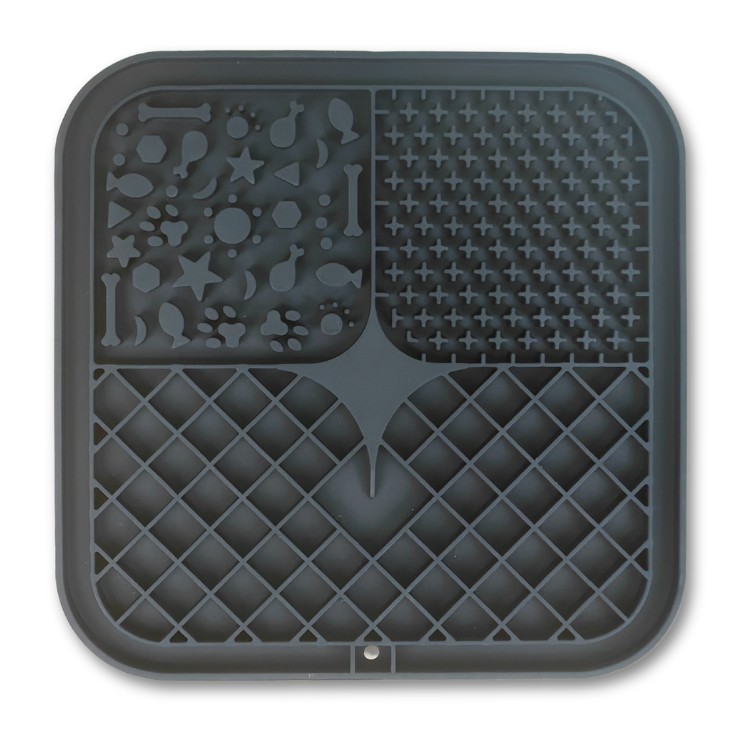
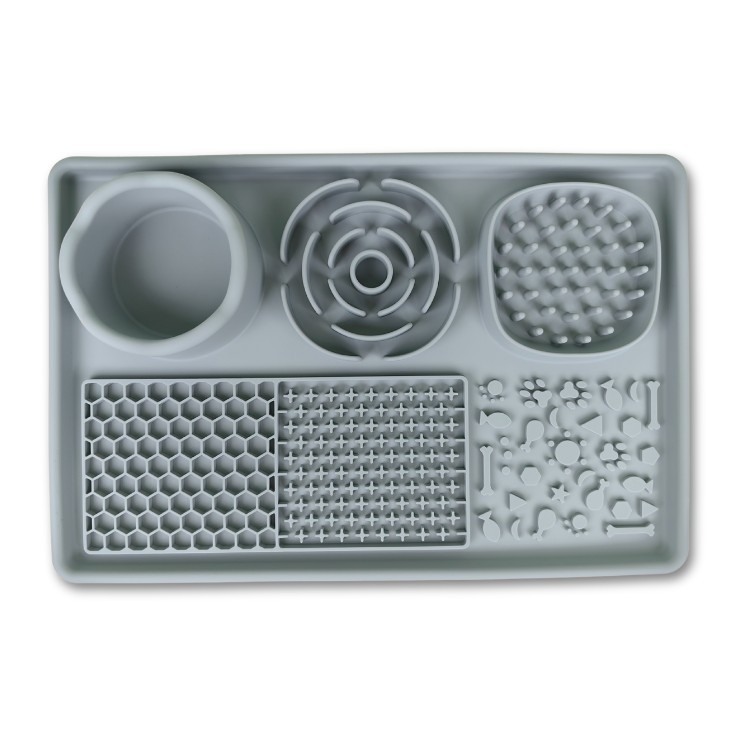
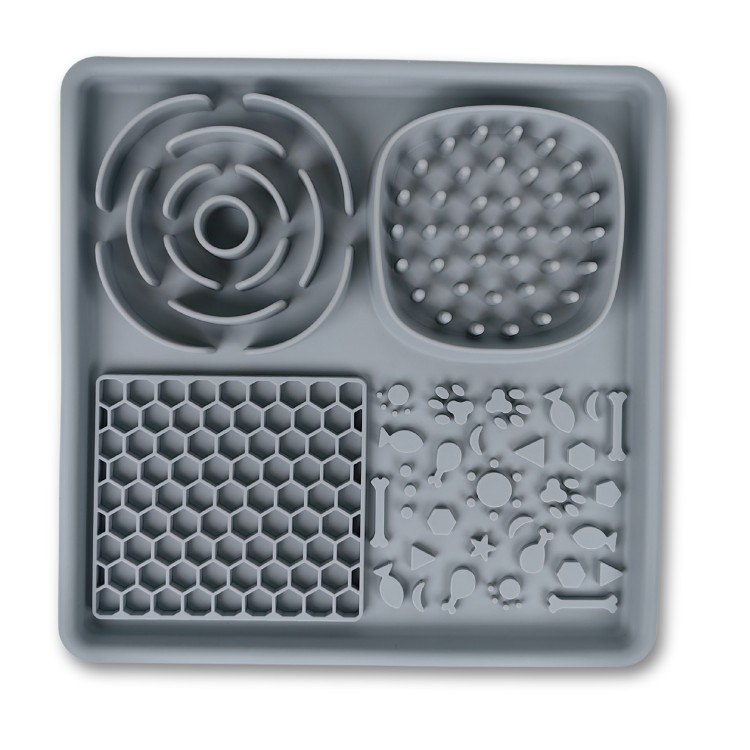
- Avoid thin webs between holes. Lattice and hole patterns must keep web thicknesses equal to or thicker than the main wall.
- Uniform wall with local reinforcement. Reinforce known bite zones instead of thickening the whole part, which slows cure and raises cost.
- No embedded hard points near the surface. Squeaker rims, bells and plastic cores should sit deep inside a compliant rubber envelope, or teeth find them.
- Moulded-in texture, not coating. Sprayed surfaces peel under teeth; texture from the mould cannot.
Safety and compliance notes
Chew toys are mouth-contact items under sustained, aggressive contact, so compound selection follows food-contact logic: platinum-cured food-grade compounds, no unbound fillers, and pigment systems tested for migration. Small detachable features — squeakers, decorative ears — must survive a defined pull force so they cannot become swallow hazards; specify a pull-off limit and test it per batch. Labelling claims ("for aggressive chewers", size-appropriateness) should match the tested reality, because mismatch here is the most common source of genuine consumer harm and reputational damage in this category.
Goods-in inspection points
- Tear-strength certificate per batch against the agreed compound data sheet.
- Vent-line and corner inspection with an AQL plan focused on crack-initiation features — flash removal scratches can seed tears.
- Pull test on detachable features to the specified force.
- Hardness spot check to catch compound substitutions.
- Sealed-bag odour check against the reference sample, since pet owners judge smell as much as look.
FAQ
Is a harder silicone toy more durable?
Usually the opposite for chewing: hard compounds resist indentation but concentrate bite stress and crack sooner. The durable combination is a high-tear compound at moderate hardness with forgiving geometry.
Can any silicone toy survive a power chewer?
No material is truly indestructible against a determined large dog, and honest marketing acknowledges this. Well-specified silicone dramatically extends service life and fails safely (stretching, not splintering), which is precisely its advantage over brittle plastics.
Do we need food-grade material for dog toys?
For anything mouthed for long periods, food-contact-grade compounds are the prudent specification — the dog's mouth contact is at least as prolonged as a human's with a baby teether. Compliance costs are modest at production volumes.
Why did our first batch pass inspection but fail in reviews?
Because standard goods-in checks do not simulate chewing. Without a specified bite-durability protocol, "passed inspection" only means the toy looked and measured correct — not that it survived its job. Add the protocol before the next production run.
Next step
Send us the target dog size, chewing intensity and design files, and we will recommend compound, hardness and test protocol before tooling. Development and durability specification are part of our custom silicone OEM and ODM service; related product families can be seen under silicone pet products and in the product catalogue.