How Silicone Pet Lick Mats Work for Feeding Slowdown and Calming
Read:13
Silicone lick mats have become a common accessory in pet feeding routines. They are used with peanut butter, yogurt, wet food, puree or paste, spread into the grooves to extend mealtime and give dogs and cats something to work on during grooming, travel, quiet time or alone periods. For brands planning a pet product line, understanding how the mat is actually used helps in choosing the right texture, size and structure for the target animal.
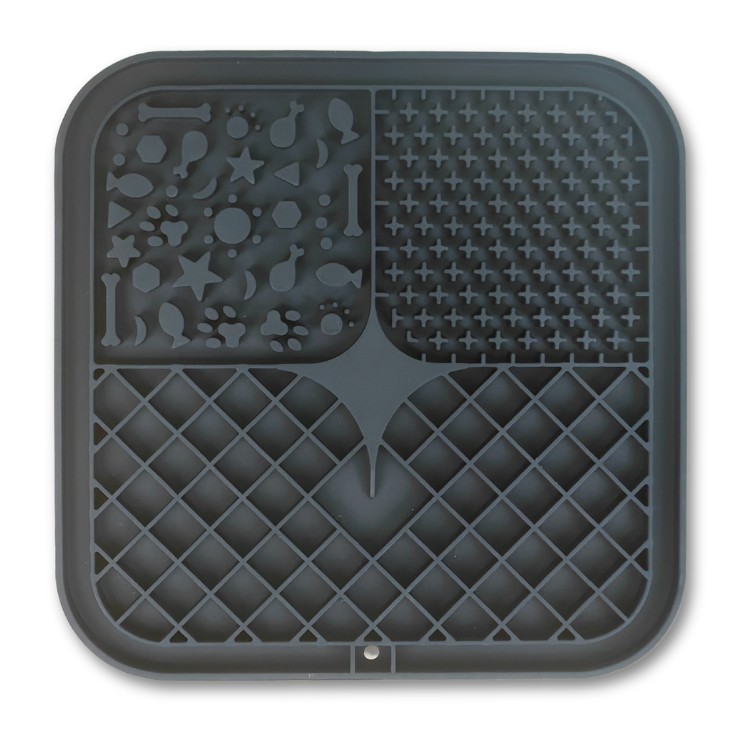
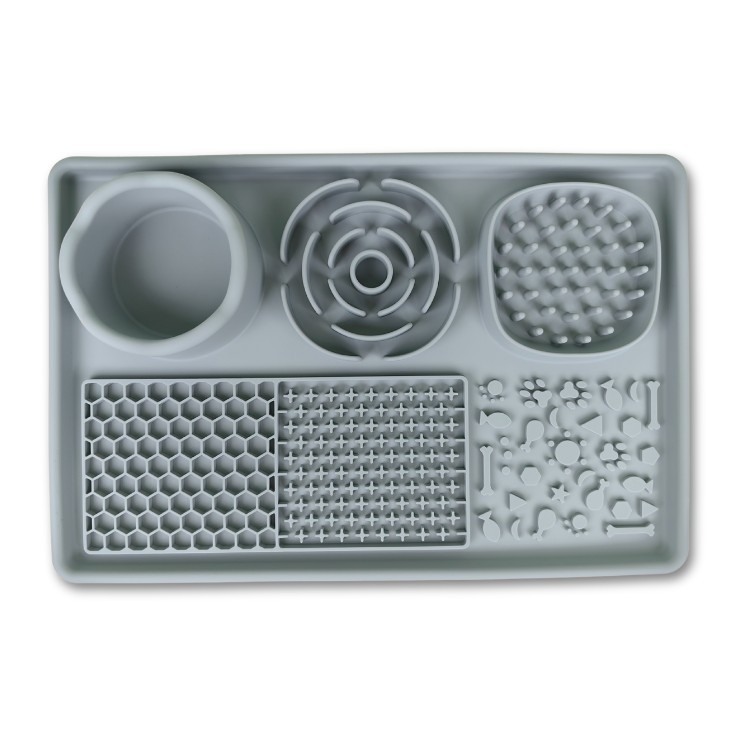
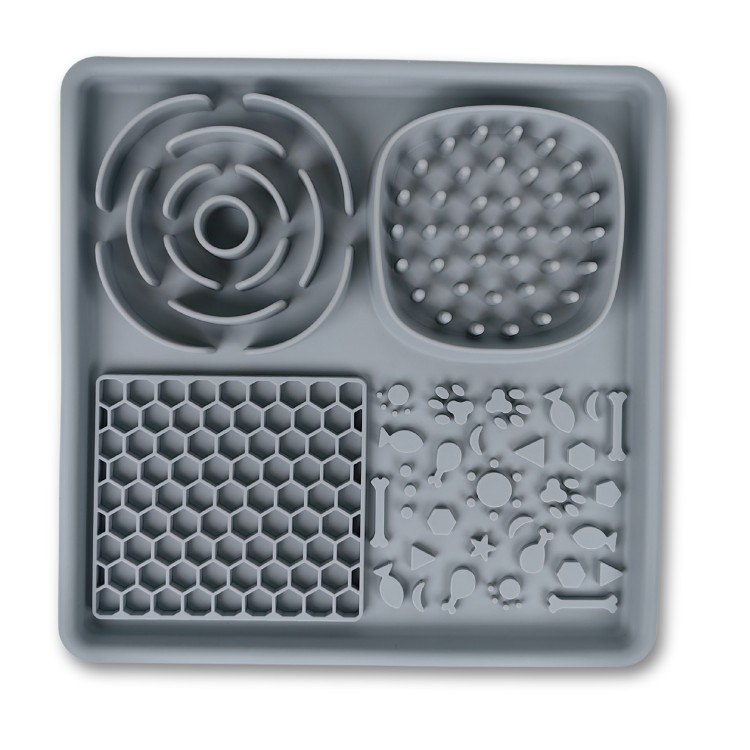
The texture pattern sets the eating pace. Deeper, wider grooves hold more paste and are easier for most dogs to clear, which suits larger dogs and longer-lasting treats. Finer, denser patterns slow licking more and work better for smaller tongues and cats, although they can be harder to clean when thick paste dries inside. Some mats combine a wide outer channel with a finer inner maze, giving one product a mix of speeds. On a sample, check whether the grooves feel rounded or sharp; rounded edges clean more easily and are gentler on the pet's tongue during long licking sessions.
The underside keeps the mat fixed. A row of suction cups or a sealed suction rim holds the mat to the floor, wall or tub side, stopping it from sliding around while the pet works. Suction strength should be tested on the common surfaces a home uses, including tile, wood and glass, since a mat that only grips smooth tile is less versatile. Material should be food-grade silicone, flexible enough to bend for washing and storage but firm enough to keep its shape under use. Thin mats warp easily and lose suction, while very thick mats are stiffer to fold and store.
Size and shape follow the animal and use case. A mat for large dogs needs a wider surface area and stronger suction to hold weight and movement; cat mats can be smaller and lighter. Square, rectangular and round shapes each suit different mounting surfaces. Bath-time mats are often placed against the tub wall, while feeding mats sit flat on the floor, so corner radius and thickness matter for both grip and comfort.
Cleaning is the practical tradeoff buyers should plan for. Grooved mats hold food residue, so they need rinsing after each use. Where the product claims dishwasher safety, confirm which rack and temperature the supplier recommends, since repeated high-heat washing can shorten silicone life. Mats with torn edges, flattened suction cups or a sticky surface after cleaning should be replaced rather than repaired. Avoid designs with deep narrow pockets that trap dried paste and cannot be reached by a brush.
For retail sets, lick mats pair naturally with slow feeder bowls, feeding mats and treat containers. Confirm size, texture and suction style for the intended pet before production, and decide whether the set needs clips, hanging holes or a storage pouch. Material reports and any pet-product safety documentation for the destination market should be reviewed with the supplier. Sampling first lets the brand test paste holding, suction on real surfaces and washability before committing to a larger order.