Soft PVC Figure Keychains: Multi-Part Assembly, Colour Layering and the Detail That Survives Moulding
Read:6
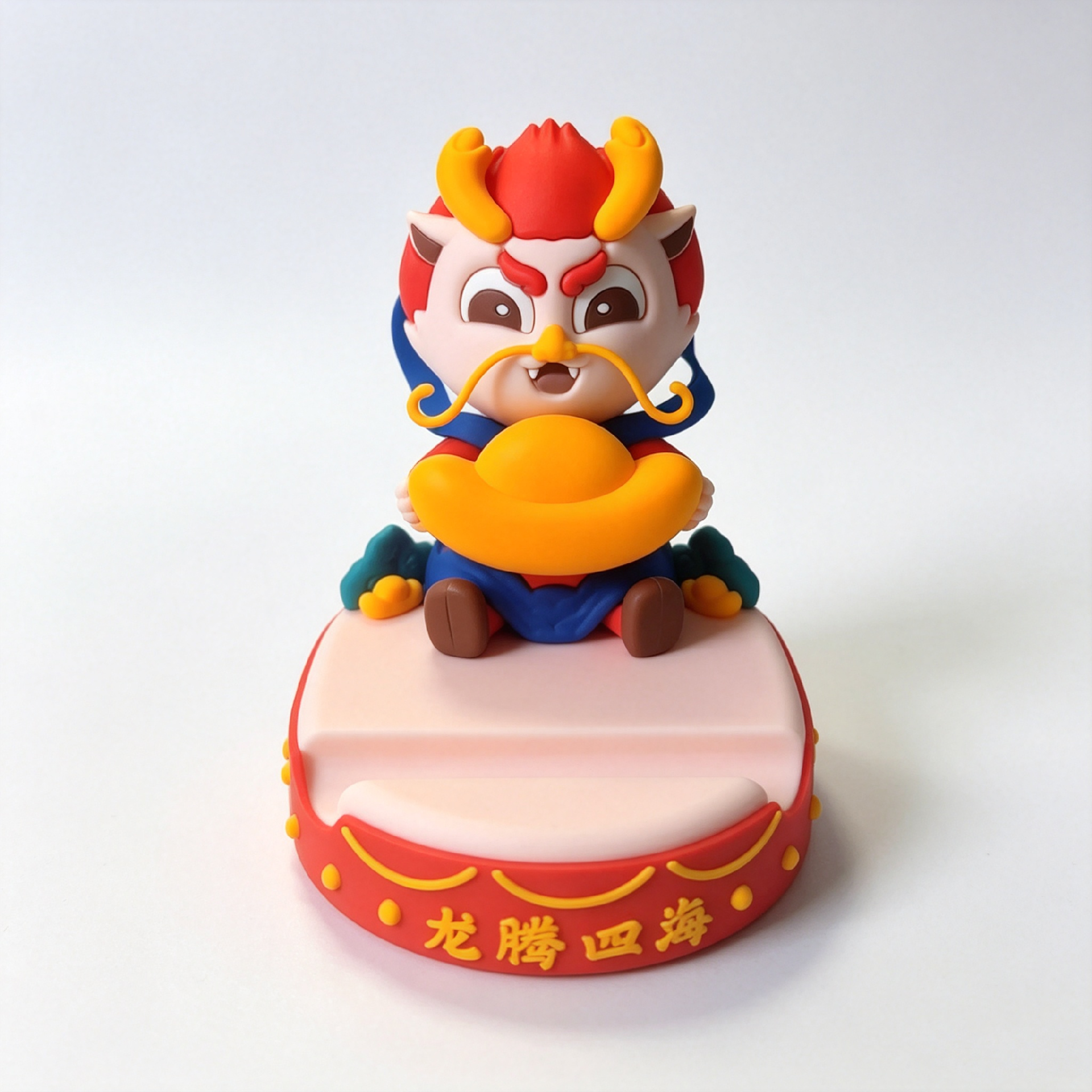
A soft PVC figure keychain looks like a single moulded object, but it is manufactured as a stack of colour layers, and sometimes as several separately moulded parts assembled by hand. That construction is the source of both its charm — dimensional colour you cannot get from printing — and its defects. The buying conclusion: judge a figure-keychain quotation by layer count, part count and minimum section sizes, because those three variables drive cost, lead time and the failure modes you will meet at inspection.
How layered colour moulding actually works
Soft PVC drip moulding builds a figure in a metal cavity by dispensing one colour at a time, curing each layer before the next is applied. The background colour fills the cavity first; subsequent colours occupy progressively shallower zones, so the final figure has discrete colour islands at defined heights, like a low-relief medal. Practical consequences for the buyer:
| Design variable | Effect on cost and schedule | Typical working limit |
|---|---|---|
| Number of colours | Each colour adds a dispensing and curing pass; five colours cost and take noticeably longer than three | 4–6 colours for figures; more is possible but each pass adds defects risk |
| Layer registration | Small colour islands must land inside their recesses by hand or needle dispensing | Islands under ~1.5 mm across are unreliable; enlarge or merge them |
| Height steps between colours | Shallow steps read poorly and catch flash; deep steps look dimensional | 0.4–0.8 mm per level gives visible relief |
| Overall thickness | Thicker figures need more curing and distort more on cooling | 3–8 mm typical for figure charms |
Every colour the artwork adds is a production pass. The most effective cost conversation you can have with a designer is which two colours can merge without changing the read of the character.
One-piece figures vs multi-part assemblies
Where the design cannot express detail in layers — an object held beside the body, a detached accessory, a figure with a swinging element — the factory moulds separate parts and assembles them. Multi-part construction expands what the figure can do, and it adds three risks that a one-piece figure does not have. First, the joint: glued joints in soft PVC depend on surface preparation and adhesive compatibility, and a pulled joint is a returned product, so specify a pull test on the assembled joint. Second, alignment: parts moulded in separate cavities need registration features, or the assembled figure reads crooked at close range. Third, labour: every assembly step adds unit cost that never amortises the way tooling does. A good factory will push back on unnecessary part splits in DFM review; take that feedback seriously, because it is usually cheaper for you, not just for them.
Detail that survives moulding — and detail that does not
The artwork-to-sample gap is where figure programmes disappoint. Rules of thumb that hold across most soft PVC figure work: positive text and outlines need about 0.8 mm minimum stroke width; recessed detail finer than 0.5 mm fills with flash and disappears; sharp internal corners collect cured overflow and should be radiused in the vector file; and colour fills smaller than roughly 1.5 mm across are better merged into a surrounding colour than reproduced faithfully. Faces are the hardest zone — eyes and mouths at true miniature scale routinely need enlargement or simplification. Approve a moulded pre-sample rather than a render, and judge it at arm's length and at 30 centimetres, because both distances are where customers will see it.
Hardness, feel and surface finish
Soft PVC figure compounds typically land around 40–60 Shore A on the equivalent scale, adjustable by plasticiser content. Softer bodies feel premium and squeeze pleasantly but scuff faster and deform in a pocket; firmer bodies hold edges but read as rigid plastic. For gift programmes, a mid-soft body with a light matte spray coating is the current retail preference: it kills the shiny "rubber toy" look and improves photo performance for listings. Phthalate compliance matters here more than in most categories because soft PVC's flexibility comes from plasticisers — for EU and US children-adjacent programmes, require compliant plasticiser systems and REACH/CPSIA-aligned test reports on the compound, not just on the finished item's mechanical behaviour.
Inspection points specific to figures
Beyond the generic AQL framing, figure keychains earn their own defect catalogue. The six findings that account for most figure rejections at goods-in:
- Colour bleed where a dark layer sits against a pale one without a clean height step between them.
- Flash lines crossing the face zone, where dispensing overflow escaped its recess.
- Joint gaps or misalignment on assembled parts, visible when the figure hangs from its ring.
- Spray overspray on adjacent colours after matte or gloss coating passes.
- Loop-root tearing or whitening where the attachment ring meets the head under pull.
- Sunken or flattened detail where sections are thinner than the agreed minimum.
Agree a signed defect photo sheet at golden-sample stage so inspection argues from evidence rather than taste. All figure programmes are made-to-order; industry-typical sampling runs two to three weeks after tooling, with mass production three to five weeks after approval depending on layer and part count.
FAQ
How many colours is too many for a figure keychain?
Four to six is the practical comfort zone. Beyond that, each additional colour adds a curing pass, raises defect probability and lengthens production measurably — merge adjacent shades before freezing artwork.
Can tiny logos go on the back of a figure?
Yes, as shallow debossed or colour-filled relief, but keep strokes at 0.8 mm or wider and expect simplification. For finer marks, a separate flat PVC tag moulded into the loop is the reliable route.
Are glued multi-part figures durable?
Properly bonded soft PVC joints survive normal use, but they are the first point of failure under deliberate pulling. Specify a pull test on assembled joints and prefer designs where parts interlock mechanically where possible.
What drives price more: size or colours?
Both, but colour count and part count usually outweigh raw size in the unit cost of a figure, because they add labour-intensive production passes that repeat on every unit, whereas size mostly affects material.
Next step
Send your character artwork for a DFM and layer-count review, or browse reference items in the product catalogue. The full drip-moulded range is shown under PVC products, and our custom OEM and ODM service covers tooling, colour separation and assembly in-house under one accountable supplier.