Silicone Hook Sets for Kids' Bedrooms and Study Corners: Colour, Safety and Seasonal Ranges
Read:8
Children's storage accessories are bought by parents in a five-minute decision and judged over two years of use, which makes the category unusually unforgiving. The buying conclusion is that motif and colour consistency sell the first unit, while safety documentation and mounting honesty decide whether the range survives its second season. Specify both before you commit to a colour story, because a pastel palette is the hardest thing to keep consistent across repeat production.
Why this segment is not a scaled-down adult range
An adult hook range is specified around load and surface compatibility. A children's range is specified around three different things: the motif must read clearly at thumbnail size on a marketplace listing, the colours must match across the set because children assemble the set visually, and every edge and fixing must survive being pulled sideways by a four-year-old rather than loaded vertically by an adult. Retail buyers who reuse adult tooling with new colours usually discover the third point at the returns stage.
Motif selection: what sells and what complicates production
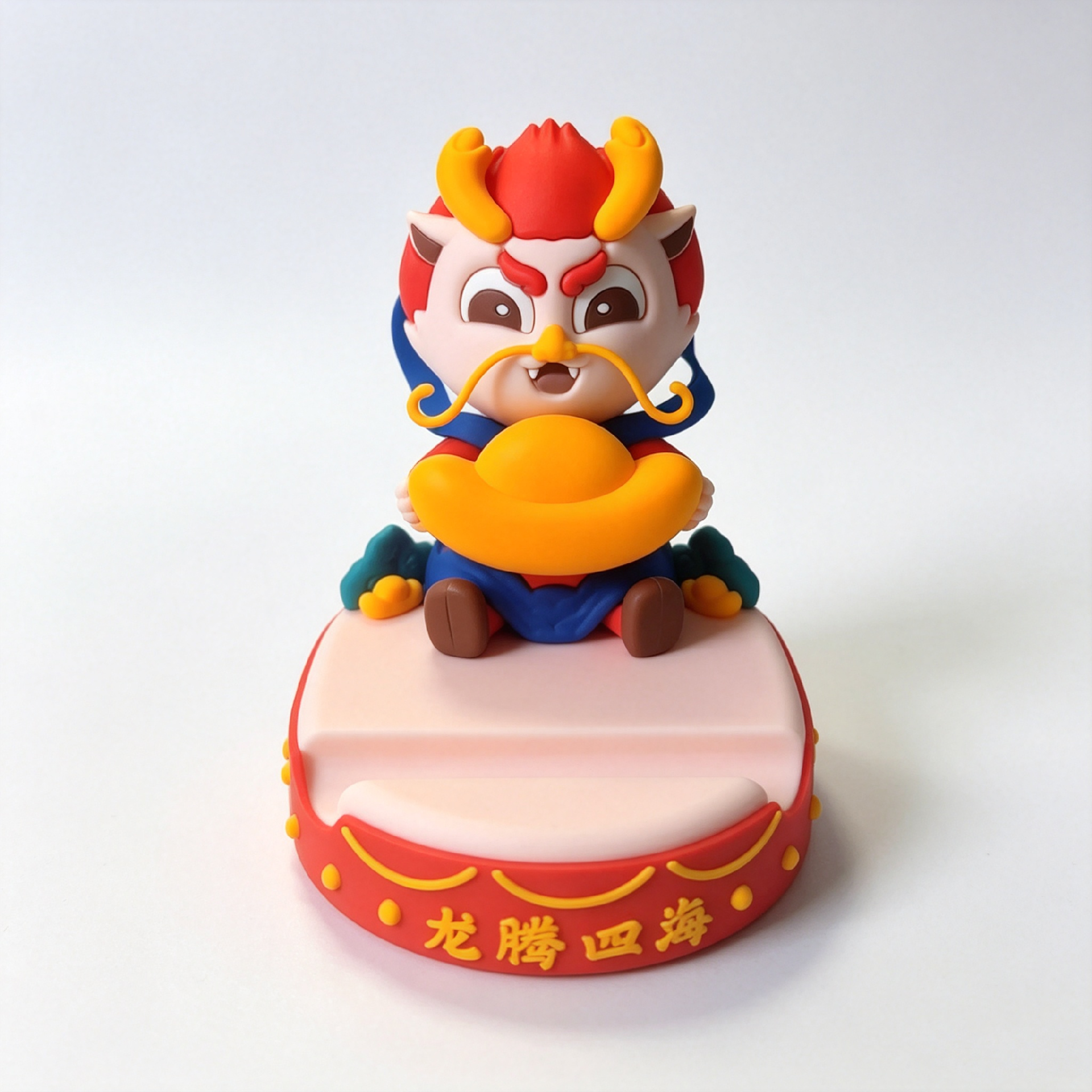
The reliable sellers in this category are simple animal heads and simple object shapes: a bear, a cat, a tiger, a penguin, a bus, a cloud. They work because the silhouette is legible at 200 pixels wide and because they can be produced in a two-colour construction without registration problems. More elaborate motifs — detailed faces, multiple small parts, thin protruding ears — raise tooling cost, raise the risk of short shots at thin sections, and increase the chance that a small protrusion snaps in service. Deep undercuts that produce a cute profile in a render are frequently the reason a sample fails a pull test.
Material, hardness and the mounting decision
Two constructions dominate, and they behave differently enough that the choice should be made before design freeze:
| Construction | Typical hardness | Mounting | Best for | Watch-outs |
|---|---|---|---|---|
| Solid silicone body with moulded slot | 50–60 Shore A | Adhesive pad or screw-through plate | Bedroom walls, wardrobes, painted surfaces | Adhesive must be specified for paint, not tile |
| Silicone over rigid PP or ABS core | 40–50 Shore A skin | Screw or keyhole slot in the core | Heavier loads: backpacks, coats, scooters | Core encapsulation must be complete; check joint line |
| Two-tone multi-part assembly | 50 Shore A | Adhesive or screw | Character ranges with face details | Assembly labour per unit; colour matching across parts |
For nursery and bedroom use, adhesive mounting is the commercial default because parents will not drill into a finished wall. That makes the adhesive the real product specification: a tape rated for painted plasterboard behaves very differently from one rated for glazed tile, and the packaging must state the limitation rather than implying universal adhesion.
Small parts, edges and the tests that matter
Children's products attract a different compliance scope from adult homeware. For the US market, CPSIA applies to products designed or intended primarily for children twelve and under, which brings third-party testing and tracking-label obligations; for European programmes, EN 71-1 mechanical and physical requirements and EN 71-3 migration limits are the usual reference points. Confirm the exact scope with an accredited laboratory rather than inferring it from the category. Beyond formal testing, three design checks prevent most complaints: no detachable component that could become a small part under force, no sharp parting-line flash on a surface a child grips, and no cavity that traps water in a bathroom environment.
Colour consistency across a set
Pastel palettes are the hardest colours to hold across batches, because small pigment variations that are invisible in a deep navy become obvious in a pale mint. Ask for a ΔE tolerance agreed in writing — 1.5 or better for adjacent pieces in the same set — and require the master standard to be a physical plaque rather than a screen reference. Where a set mixes silicone and painted components, the painted parts will drift first; specify the same master for both and inspect them side by side, not separately.
Seasonal timing, tooling and MOQ
Back-to-school and January organisation promotions are the two peaks, and both reward early commitment. Industry-typical practice for a new motif is tooling with samples in two to three weeks and mass production three to five weeks after approval, with MOQs commonly starting around 1,000–2,000 pieces per colourway. A range that reuses one body tool with four colourways is far more efficient than four separate tools, and it keeps the shelf story coherent. Treat the ranges above as planning figures and confirm both stages in writing.
What to put in the RFQ
- Motif brief with a legibility check at listing thumbnail size.
- Mounting method and the surfaces the claim covers.
- Target age band and the compliance scope that follows from it.
- Colourways per set, with a ΔE tolerance and a physical master standard.
- Packaging format: hanging blister, printed carton or shelf-ready set.
- Whether the range must extend to matching bookends, desk tidies or bag straps.
FAQ
Are animal-shaped hooks suitable for a child's bedroom?
Yes, provided the body has no detachable parts, the parting lines are clean, and the mounting method is stated honestly for painted walls. Confirm the applicable children's product testing scope for your market before listing.
Will adhesive hooks hold a school backpack?
On smooth, sealed surfaces a well-specified acrylic foam pad can carry a loaded school bag, but painted plasterboard and textured walls reduce holding substantially. If the load claim matters commercially, use a screw-mounted core version for the heavier SKU and reserve adhesive versions for light items.
How do I keep pastel colours consistent between orders?
Fix a physical colour master per shade, agree a ΔE tolerance, and require the factory to retain the master plaque with a batch record. Pastels drift more than saturated colours, so inspect adjacent pieces of a set together under the same light.
What MOQ applies to a new character hook?
Industry-typical MOQs start around 1,000–2,000 pieces per colourway on a new mould, with lower quantities feasible when an existing body tool is reused and only the colour changes. Confirm tool ownership terms before the first deposit.
Next step
Send your motif sketches, mounting preference and target age band for a manufacturability review, or browse reference items under silicone baby and nursery products and the wider product catalogue. Our custom OEM and ODM service handles tooling, colour matching and retail packaging in-house.