From RFQ to Golden Sample: The Sampling Process for Custom Silicone and PVC Orders
Read:7
Most disputes on custom silicone and PVC orders trace back to the same root: the sampling stage was rushed or its milestones were never formally signed off. The buying conclusion is that a disciplined sample ladder — RFQ pack, hand sample or 3D print, tooling sample, pre-production sample, golden sample — costs two extra weeks and prevents the far larger losses of a rejected mass-production run. This article maps each stage, what to approve at each gate, and where timelines realistically land.
Stage 1: the RFQ pack decides everything downstream
Sampling quality is capped by the quality of the request. A complete RFQ pack contains: dimensioned drawings or a 3D file, material and hardness targets (e.g. 30–40 Shore A silicone or soft PVC at a stated durometer), colour references, packaging intent, target market and compliance scope, and the quantities you expect per order. Quotations built on incomplete packs embed assumptions that surface as "that wasn't included" arguments at sample stage. State which elements are fixed and which are open to the factory's engineering judgment — factories respect a pack that distinguishes the two, and their engineers will flag manufacturability conflicts before steel is cut.
The sample ladder at a glance
Each stage approves a different set of properties, which is why skipping a stage leaves an uncovered risk:
| Stage | Typical timing | What it approves | What it cannot tell you |
|---|---|---|---|
| Hand sample / 3D print | Days | Geometry, proportion, hand-feel | Real material behaviour |
| Tooling sample (T1) | 2–3 weeks after tool start | Dimensions, tool quality, function | Colour consistency across cavities |
| T2 / adjustment round | 1–2 weeks per round | Must-fix items cleared | Production-condition behaviour |
| Pre-production (PP) sample | 1–2 weeks after T-approval | Colour, finish and tests at production settings | Nothing — this is the full dress rehearsal |
| Golden sample sign-off | Immediate on PP pass | The binding reference for shipments | — |
Stage 2: hand samples and 3D prints
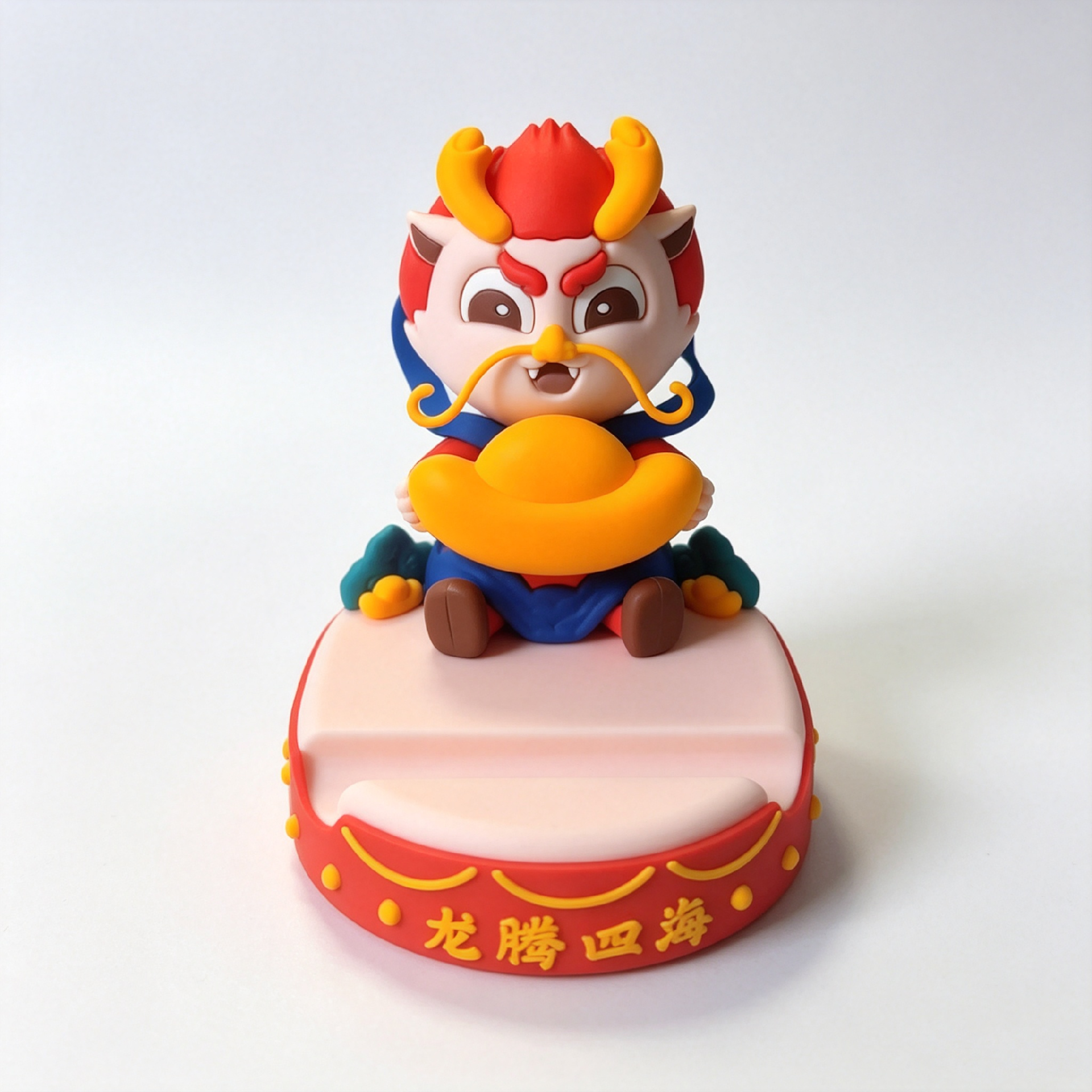
For items with novel geometry — a collapsible bowl's fold lines, a hook's adhesive boss, a character-free mascot silhouette — a hand sample or 3D-printed mock-up validates shape and ergonomics before tooling money is spent. This stage takes days, not weeks, and its purpose is narrow: proportion, hand-feel and assembly fit. It will not tell you anything about silicone's actual flexibility or PVC's drip behaviour, so resist approving material properties from a print. Approve geometry only, in writing, with a dated mark-up.
Stage 3: tooling samples (T1) and what to check
T1 is the first article off the new tool, and it is where the real review happens. Check dimensions against the drawing at agreed tolerances, parting lines and gate marks against cosmetic requirements, colour against your Pantone reference under agreed lighting, and functional behaviour — latch force, fold memory, cap fit. Expect imperfections: T1 tools are freshly cut, and first shots often show slight flash, sink or colour drift. The professional response is a written T1 comments list that separates must-fix items (dimension out of tolerance, functional failure) from cosmetic preferences the factory can address with polishing or process tweaks. Tooling adjustment cycles typically add one to two weeks per round, so budget for two rounds rather than hoping for one.
Stage 4: pre-production sample under production conditions
The stage most often skipped, and the one that prevents most disasters. A pre-production (PP) sample is made on the production tool, with production material batches, production pigment and the actual production process parameters — not a lab press. It answers the questions T1 cannot: colour consistency across a cavity set, cycle-time behaviour, and whether the compound's surface finish holds up at rate. Approve the PP sample only after the tests in your specification pass: food-contact migration where relevant, pull tests on latches, fold-cycle counts on collapsible items. Industry-typical timing from tool start to PP approval lands around three to five weeks for straightforward compression parts and longer for multi-component assemblies.
Stage 5: golden sample sign-off and retention
The golden sample is the signed, dated, sealed reference that mass production will be judged against — typically two or three identical sets: one retained by the factory, one by the buyer, one archived with the purchase order file. It locks dimensions, colour (with a stated ΔE tolerance), surface finish, weight and packaging. Photograph and measure the golden sample yourself and record the numbers; when a later shipment dispute arises, the golden sample plus your recorded data is what resolves it. Without this artefact, "it looked different" arguments have no referee.
Where timelines actually go
Realistic cumulative planning ranges for a straightforward custom silicone item: RFQ-to-quote one week; hand sample days where needed; tooling fabrication two to three weeks; T1 plus one adjustment round one to two weeks; PP sample and approval one to two weeks. Total: roughly five to eight weeks from approved RFQ pack to production release, longer for multi-material or multi-component programmes. The schedule risk concentrates in approval latency — every day a sample sits unreviewed on the buyer's side pushes production by a day, so agree response-time expectations at the start.
What to put in the RFQ
- Complete drawing/3D pack with tolerances and cosmetic-class callouts.
- Material, hardness, colour (Pantone + ΔE tolerance) and compliance scope.
- Agreed sample ladder: which stages apply and what each gate approves.
- Test list to pass at PP stage, with methods named.
- Golden sample protocol: how many sets, who retains them.
- Buyer review SLA — how fast you will respond to each sample.
FAQ
How long does sampling take for custom silicone products?
Industry-typical totals run five to eight weeks from an approved RFQ pack to production release: tooling two to three weeks, T1 review plus one adjustment round one to two weeks, PP sample one to two weeks. Multi-component or decorated items take longer; slow buyer reviews stretch every stage.
What is the difference between T1 and a golden sample?
T1 is the first shot off the new tool — a working draft used to find dimensional and functional issues. The golden sample is the final, signed reference made under production conditions that future shipments are judged against. Approving T1 as if it were the golden sample is the classic cause of disputed mass production.
Can I skip the pre-production sample to save time?
You can, and you accept unpriced risk: colour drift across cavities, process-dependent surface defects and compound behaviour at rate only reveal themselves under production conditions. The PP stage costs one to two weeks; a rejected production run costs far more than that.
Who owns the samples?
Agree retention at sign-off: typically the factory keeps one set, the buyer takes one, and a third is archived against the purchase order. Also agree that the factory may not alter the tool without a new sample round — silent tool modifications are how "same product, different shipment" disputes begin.
Next step
Send your RFQ pack for a manufacturability review and a staged sampling plan, or browse reference items under silicone outdoor products and silicone travel bottles. Our custom OEM and ODM service runs the full ladder from RFQ to golden sample in-house.