High-Temperature Silicone for BBQ and Grill Accessories: What Buyers Should Test
Read:9
Every BBQ catalogue says "heat resistant", and almost none of the claims say what that means. The buying conclusion for grill-side silicone — basting brushes, grill mats, mitts, skewer holders, side-table mats — is to convert the marketing phrase into two testable numbers: a continuous-use temperature with an ageing test behind it, and a peak contact temperature relevant to the actual use. Products fail predictably at thin tips, edges and coal-contact zones, so specify geometry with the same seriousness as the compound.
Continuous versus peak temperature
Silicone rubber's chemistry is stable to roughly 230–250 °C for continuous exposure, and brief contact spikes far higher — which is why a silicone spatula can lift food off a 200 °C pan and survive. The failure mode is not instant melting but gradual oxidation: over hours at excessive temperature, the surface hardens, loses elasticity and eventually cracks. A credible specification therefore reads "continuous 230 °C per ASTM D573 heat-ageing, tensile and elongation retention above 80% after 70 hours", not "withstands 500 degrees". When a supplier quotes an extraordinary number, ask which test produced it; the answer reveals whether the claim is engineering or decoration.
Where grill products actually fail
Field failures concentrate in three places. First, thin features: basting-bristle tips, mat edges and thin glove seams age fastest because heat penetrates a small mass. Second, coal and flame contact: silicone tolerates hot air and hot steel, but direct coal contact or flame lick exceeds any rubber's capability — a grill mat is designed to sit on grates with food on top, not under coals, and packaging should say so. Third, secondary components: metal-reinforced handles conduct heat to grips, plastic clips soften, and printed logos lift after hot, oily washes. A heat claim for the silicone does not automatically cover the assembly.
| Product | Realistic thermal envelope | Primary failure risk | Test to demand |
|---|---|---|---|
| Basting brush | 230 °C continuous; brief grill-side contact | Tip cracking; joint failure | Heat ageing; joint retention after cycles |
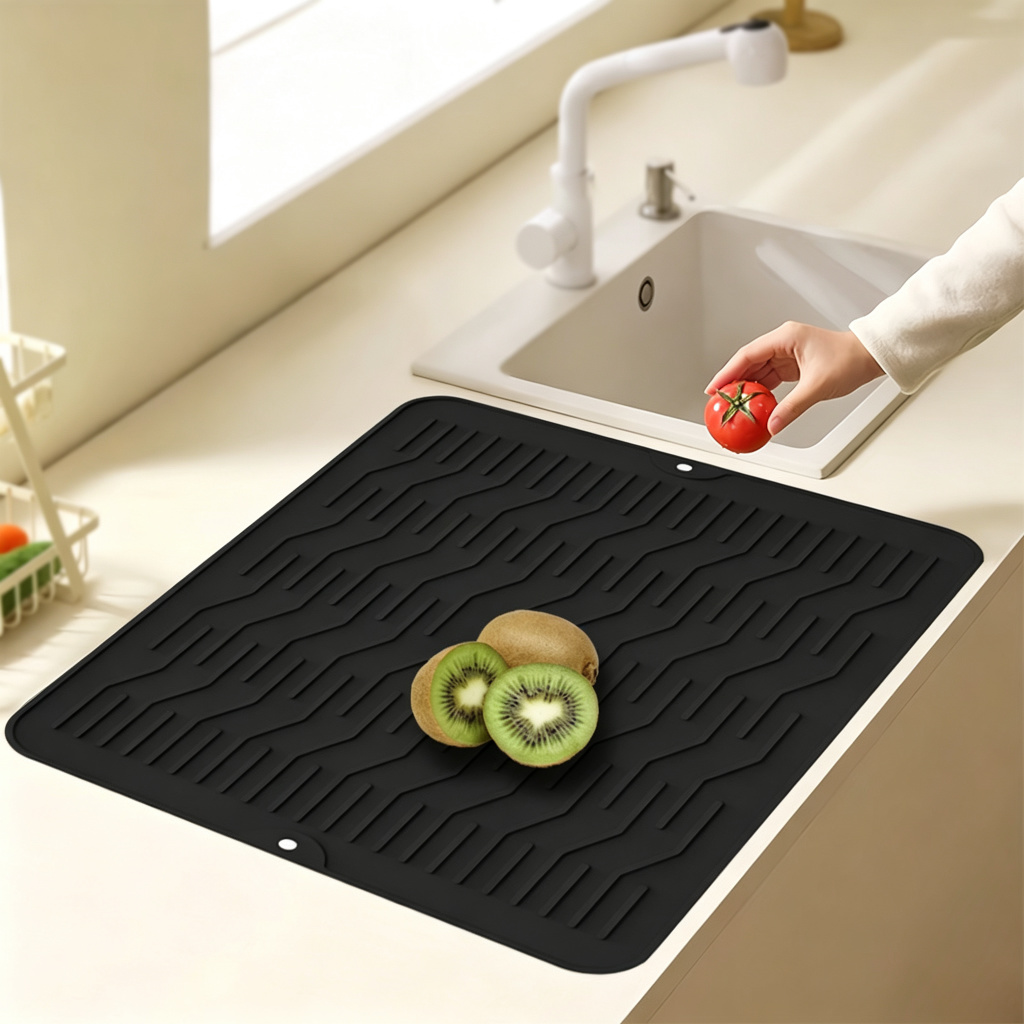
| Grill mat (silicone-coated or solid silicone) | grate-contact use with food above; no coal contact | Edge fraying; misuse under coals | Contact ageing on hot steel; tear strength |
| Oven/BBQ glove | 250 °C brief handling with air gap | Thin seams; thermal transfer through fill | Contact heat (EN ISO 20344-style) or equivalent |
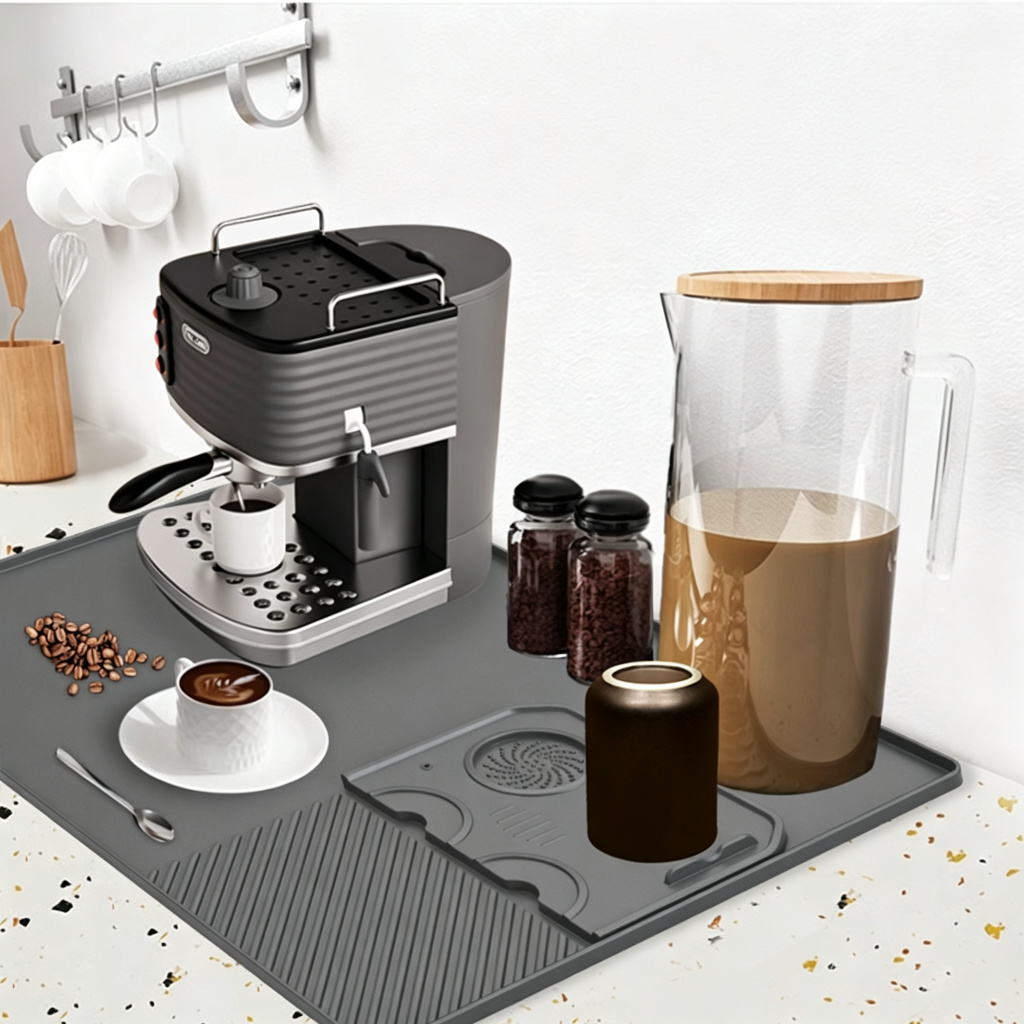
| Side-table mat | Hot dish contact, ambient sun | UV dulling; staining | UV ageing; stain resistance |
| Skewer holder / rest | Indirect heat only | Thin feet collapse | Compression set at temperature |
Compound choices: cure system, fillers and odour
Two compound decisions shape grill performance. Cure system: platinum-cured silicone wins on odour, purity and long-term stability, which matters when a hot brush touches food; peroxide-cured grades can carry by-products that release smell on first heating unless post-cured properly. Fillers: filler loading tunes cost and hardness, but over-filled compound ages visibly — it chalks, hardens and loses tear strength at the tips first. Ask which cure system is used and whether first-use odour is controlled; "smoke-smelling on first use" reviews are a category-killer on marketplaces.
Food-contact status compounds the question because grilling is direct food contact at temperature. Specify FDA 21 CFR 177.2600 or LFGB-grade compound with the report for the coloured batch, and ask whether migration data covers use at elevated temperature, not just ambient.
Design guidance that prevents complaints
- Thicken thin features: bristle bases, mat edges and glove seams benefit disproportionately from 20–30% more material at the stress point.
- Keep silicone away from flame: geometry and instructions both matter — publish clear use boundaries on packaging.
- Isolate heat paths: avoid bare metal bridging hot surface to grip; use silicone overmould or deliberate air gaps.
- Design for cleaning: grill grease bakes on; smooth faces and generous radii wash clean, deep grooves do not.
- Test the assembly, not the material: a heat-safe brush head with a heat-unsafe clip is still a return.
Cost and lead-time notes
Grill-grade compounds sit at a modest premium over standard food-contact grades; platinum cure adds a little more and buys odour control that reviews reward. Tooling for brushes, mats and gloves is conventional silicone tooling — samples typically one to three weeks, mass production three to five weeks depending on complexity and colour. Because BBQ is seasonal, order timing matters more than unit price: programmes targeting a spring launch should lock tooling in winter, since factory capacity for grill SKUs concentrates ahead of the northern-hemisphere season.
FAQ
Can silicone grill mats touch coals?
No. Direct coal or flame contact exceeds any silicone product's envelope. Mats are designed for grate-top use with food above; state this on packaging and in listing copy to prevent misuse and returns.
Why does my silicone brush smell on first use?
Usually volatile by-products from an incompletely post-cured peroxide system, or absorbed manufacturing oils. Specify platinum-cured compound with a documented post-cure, and run a first-heating odour check on production samples before shipping.
Is "500 °F heat resistant" a meaningful claim?
Only with a test basis. Convert claims into continuous-use temperature with an ageing protocol and a retention criterion; otherwise the number is marketing, not specification.
Do colours affect heat performance?
Inorganic-pigmented compounds hold heat performance well; some organic pigments shift colour or degrade sooner at temperature. For bright grill products, ask whether the pigment system is rated for the claimed continuous temperature.
Next step
Send product drawings and target thermal claims for a compound and test-plan recommendation. See grill-adjacent kitchen items under silicone kitchen products and outdoor lines under silicone outdoor products, with development support through the custom OEM and ODM service.