Silicone Straw Toppers: Design, Safety and Sourcing for Beverage Brands
Read:7
Silicone straw toppers — the small character or emblem caps that plug onto a drinking straw — have become one of the most effective loyalty giveaways for coffee chains and beverage brands, precisely because they are cute, collectable and cheap. The sourcing conclusion, however, is sober: a topper is a small, child-appealing food-contact item, and the three decisions that matter — small-parts safety design, material compliance and straw fit — must be engineered in from the first sample, not patched after a compliance review.
What a straw topper must actually do
A topper has four jobs: plug onto the straw with a friction fit that survives a jostled cup carrier; seal the straw opening when not in use; survive washing; and carry the brand's artwork charmingly enough that customers keep it. The friction fit is the engineering heart. Straws vary in outer diameter — commonly 6, 8, 10 and 12 mm — and wall thickness varies too, so the plug bore must be specified for a target straw family with a tolerance, not left to feel. A fit that is firm on the sample straw can be loose on a supplier's slightly thinner straw, and a loose topper is a lost topper.
Design the plug with a slight taper or a ring rib so the fit self-adjusts across tolerance, and prototype with real straws from your cup supplier, not generic ones. Include a pull-off force requirement — industry practice for this class of accessory is a minimum removal force in the low-newton range — so the spec survives sampling disputes.
Small-parts safety: the non-negotiable framing
A topper is exactly the size of object that the US small-parts regulation and EU toy-safety frameworks worry about, and it is marketed with strong child appeal even when the drink itself is adult. Two consequences follow for any serious programme:
- Age grading and warnings: packaging must state an appropriate age and carry small-parts choking-hazard warnings where required (for the US market, the familiar warning statement format). Design artwork and packaging layout to reserve space for this from the start.
- Design to be beyond the cylinder: where the brand concept allows, size the topper so the whole item clearly exceeds the small-parts test cylinder; larger toppers are both safer on this metric and give artwork more room.
Never treat the topper as a toy while also relying on "not a toy" labelling alone. If collectable series are aimed at family customers, run the design through a toy-safety assessment for the target market and document it — that file is what protects the brand when a regulator or a journalist asks.
Material compliance for something that touches the drink
The topper sits on the straw that goes in the mouth, so specify a food-contact silicone meeting FDA 21 CFR 177.2600 for the US or LFGB-based rules for Europe, with the test report covering the coloured compound — collectable series are usually bright, and bright pigments are where cheap compounds fail migration. Where PVC drip characters are chosen instead of silicone for finer relief, apply the phthalate-free plasticiser requirement (REACH and CPSIA limits) and demand reports against the actual article, not a material-family certificate.
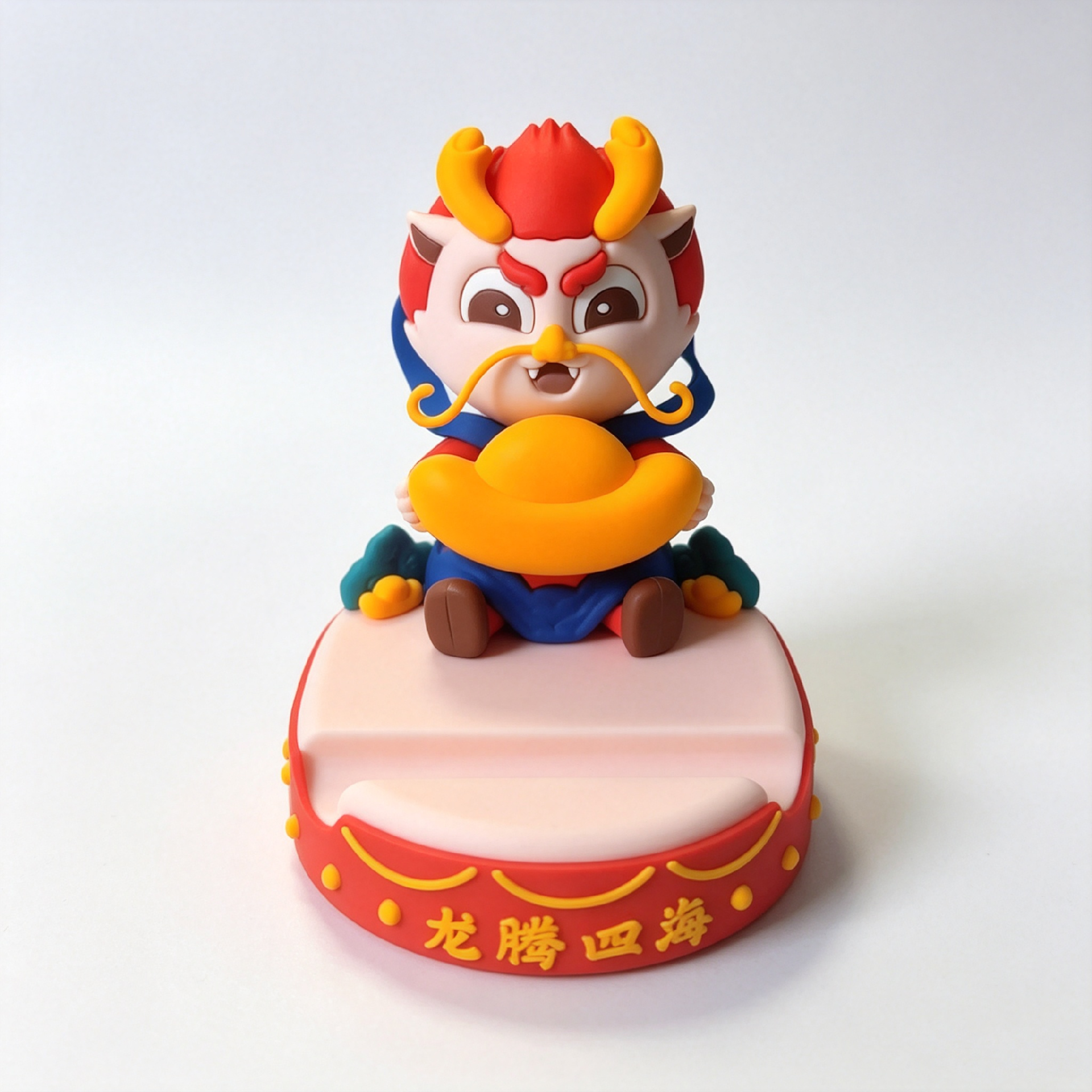
Silicone is generally the preferred material here for its washability and taste neutrality. The trade-off is detail: very fine character features are easier in PVC. Many brands split the range — silicone for items that touch the drink, PVC or epoxy for bag charms in the same series — which keeps compliance clean while letting artwork stay consistent.
| Requirement | Silicone topper | PVC drip topper |
|---|---|---|
| Food contact at the straw | Native food-contact grades (FDA 177.2600 / LFGB) | Possible but phthalate-free system must be specified and documented |
| Fine character detail | Good above ~0.6 mm features | Best; layered colour relief holds small detail |
| Dishwasher survival | Excellent; colour through the material | Good; surface layers can abrade long term |
| Odour and taste | Neutral with platinum cure | Neutral; plasticiser choice must be verified |
| Collectable colour depth | Multi-colour via layered moulding | Strongest; each colour is a poured layer |
Tooling for tiny, detailed parts
Straw toppers are small enough that mould economics differ from other silicone products: cavity counts run high (a multi-cavity tool produces dozens of pieces per cycle), unit costs are cents, and the tool is the real investment. Artwork rules tighten at this scale — features below about 0.6 mm width or 0.4 mm relief either fill in or tear on demoulding, so designs must be adapted by the toolmaker rather than copied from a sticker sheet. Expect the factory to propose simplified versions of fine artwork and treat that as a competence signal, not an obstruction.
Flash control matters more than on larger parts because a sliver of flash at the plug bore breaks the seal and collects grime. Ask how the parts are deflashed (cryogenic or manual) and include bore cleanliness in incoming inspection.
Hygiene, washing and collectability
Success metrics for a collectable series include wash survival: the topper goes into home dishwashers and café glasswashers. Silicone compounds handle this well; printed decoration on the topper is the risk point, so prefer moulded relief or two-layer colour for anything expected to survive months of washing. Collectability programmes should also fix colour tolerance with Pantone references per character, because a "rare" variant that looks identical to the common one next season generates social-media complaints rather than excitement.
Cost, MOQ and programme structure
Industry-typical figures: a multi-cavity tool for a topper family, samples in one to two weeks, and mass production two to four weeks after approval. MOQs per character design usually start around 1,000–5,000 pieces because the tool produces efficiently; multi-character collectable sets share tooling strategy to keep per-character MOQs sane. Packaging (blind bags, header cards) is usually the bigger per-unit cost than the topper itself — cost it early.
FAQ
Are straw toppers a choking hazard?
They are a small, detachable item with child appeal, which is exactly the profile covered by small-parts rules. Mitigate with sizing above the small-parts cylinder where possible, age grading, warning labels, and honest documentation. Treat the topper as a safety-relevant accessory, not a trinket.
Will one topper fit all straw sizes?
Not reliably. Specify the straw outer diameter and wall thickness it must fit, prototype with production straws, and set a pull-off force range. If your programme spans multiple straw sizes, two bore variants are cheaper than a returned-goods problem.
Silicone or PVC for toppers?
Silicone for anything on the drinking straw: food-contact by design, washable, taste-free. PVC drip wins where fine 3D detail matters more than drink contact — bag charms and display pieces in the same series.
How do collectable series stay secret before launch?
Split tooling across moulds where possible, ship blind-bag packaging assembled in-house, and contract confidentiality into the purchase agreement. Ask which production steps happen on-site versus subcontracted, because every hand-off is a leak point.
Next step
Send artwork and straw specifications for a feasibility and compliance review. Related capabilities live in silicone kitchen products, small-part-safe accessories for families in silicone baby products, and alternative detail processes under PVC and epoxy drip products.