Acrylic vs Soft PVC vs Silicone for Custom Charms and Keychains: Which Material Fits Your Program?
Read:10
For custom charms, keychains and bag accessories, the material decision drives everything downstream: artwork limits, unit cost at volume, durability in the field, and the compliance paperwork your market requires. The practical conclusion: acrylic wins where full-colour artwork fidelity is the priority, soft PVC wins on dimensional sculpted detail at low tooling cost, and silicone wins on feel, durability and baby-adjacent safety positioning. Choose by artwork type and duty cycle, not by unit price alone.
Material profiles in one paragraph each
Acrylic charms are laser-cut or die-cut clear or coloured plastic sheets, typically 2–3 mm thick, with artwork UV-printed directly onto the surface. They deliver photographic, full-colour reproduction at the lowest tooling cost, which is why they dominate anime, illustration and photo-based merchandise. The trade-offs are hard edges, a rigid feel, and scratch-wear on the printed face over months of use.
Soft PVC charms are drip-moulded layer by layer from plastisol into a metal or plastic key fob, producing raised, dimensional colour areas with crisp outlines. Colour count is effectively free — each layer is a colour — and small text and logos hold up well. The material is flexible and chunky, with the classic rubber-tag feel. Compliance attention centres on plasticisers: phthalate restrictions in the EU and US are the reason a capable PVC supplier documents plasticiser systems.
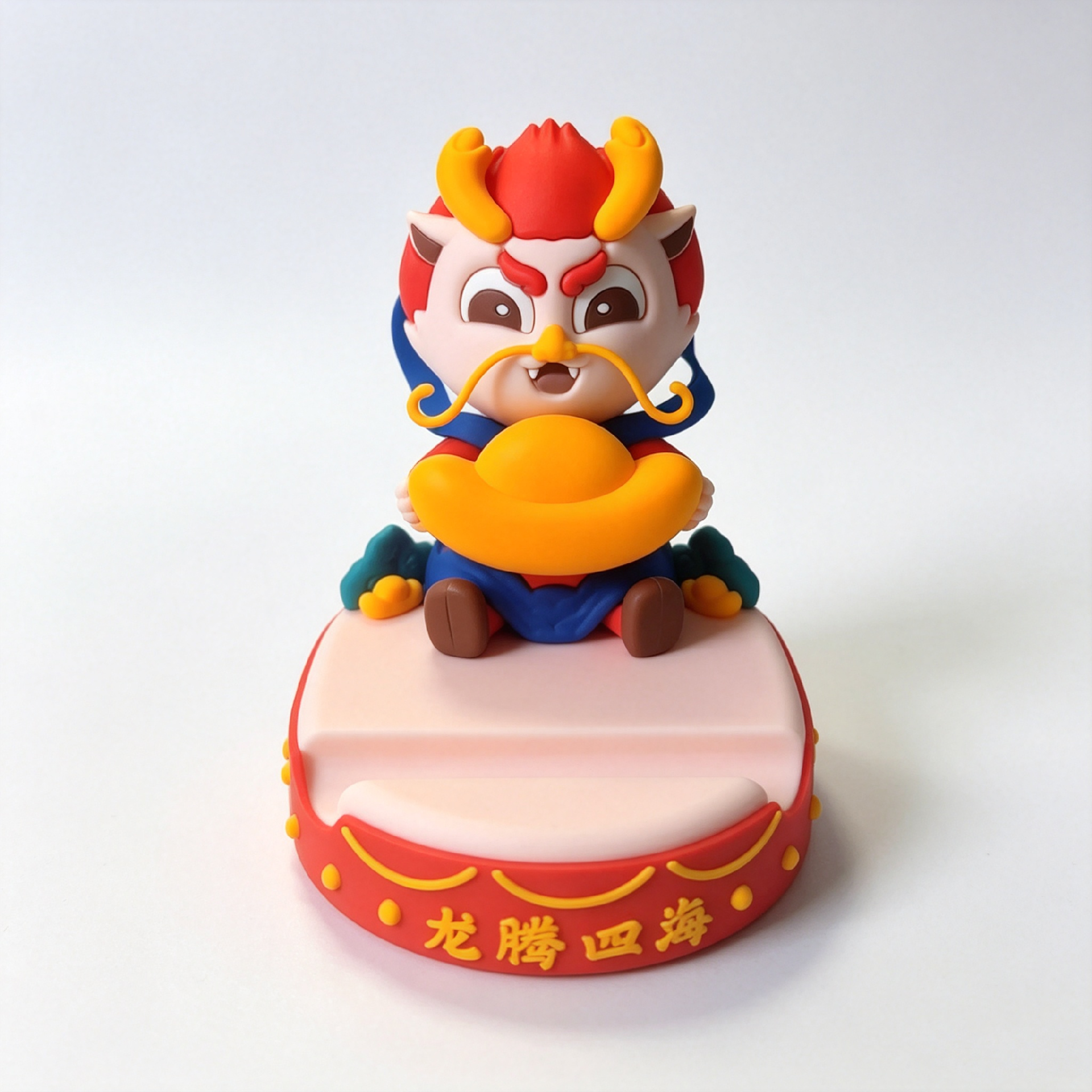
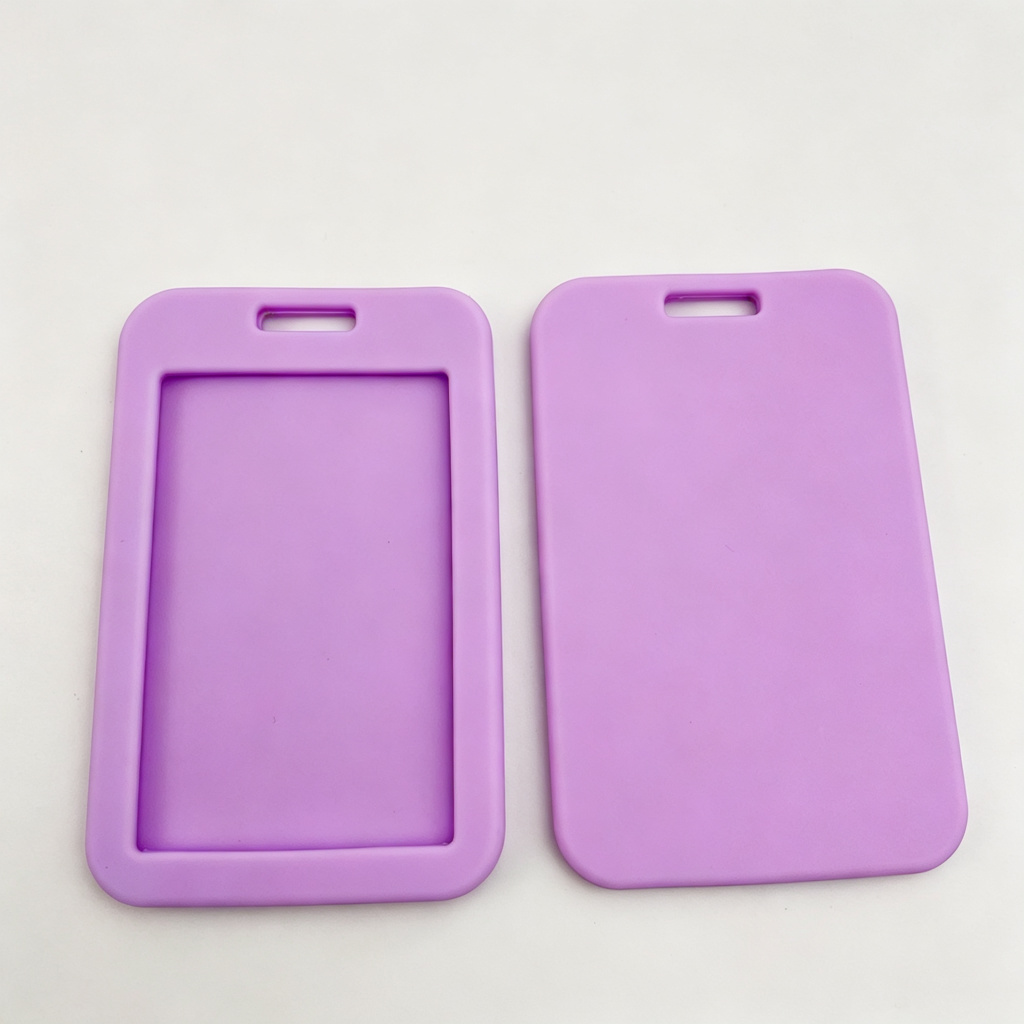
Silicone charms and tags are compression- or injection-moulded from thermoset silicone rubber. They offer the softest touch, the best low- and high-temperature tolerance, no plasticiser concerns, and the strongest durability under flexing and chewing-level abuse. Fine artwork detail is the weakest point: text and thin lines reproduce less sharply than in PVC, and full-colour printing requires processes with limited durability.
Side-by-side comparison
| Criterion | Acrylic | Soft PVC | Silicone |
|---|---|---|---|
| Artwork fidelity | Excellent — full colour, gradients, photos | Very good — solid colours, crisp edges; no gradients | Fair — solid colours; fine detail limited |
| Tooling cost | Lowest (cut dies, no mould for simple shapes) | Low–moderate (mould per shape) | Moderate (compression or injection tool) |
| Unit cost at 10k pcs | Low | Low | Low–moderate, weight-driven |
| Feel | Rigid, hard edges | Flexible, chunky, rubbery | Softest, skin-like |
| Durability in use | Face print can scratch; corners chip | Good; colour layers can peel if abused | Best; survives flexing, heat, water |
| Compliance notes | Ink adhesion; sharp edges for kids' items | Phthalate/plasticiser documentation critical | Cleanest profile; food-contact grades available |
| Best for | Illustration and photo merchandise | Logo tags, mascots, layered colour art | Premium tags, baby-adjacent and heavy-use items |
How production methods shape the decision
Acrylic is essentially a print-and-cut process — there is no mould in the traditional sense, so shape changes cost almost nothing, and sampling is fast. That flexibility makes acrylic the default for programs with many designs and small runs per design, such as fan merchandise drops. PVC and silicone both require a mould per shape: budget one tool per design, and expect the tool to pay back at higher volumes. For mixed programs, a common structure is acrylic for the long-tail designs and PVC or silicone for the evergreen SKUs that will run for years.
Compliance and market considerations
- Children's products: silicone's material-level cleanliness (food-contact grades, no plasticisers) makes it the safe positioning; if the item can be mouthed, avoid acrylic's sharp corners and verify PVC plasticiser compliance line by line.
- EU and US plasticiser rules: restrict specific phthalates in plasticised materials; a competent PVC supplier provides the relevant test reports as standard — ask for them before, not after, tooling.
- Metal hardware: key rings and clasps are usually nickel-free plated steel or zinc alloy; confirm plating specs for skin-contact items.
- Labelling: material content marks (e.g. "silicone" or "PVC") on the back of the charm or on the card simplify customs and retail sorting.
Cost structure beyond the unit price
Total program cost includes tooling amortisation, plating and assembly of hardware, card and polybag packaging, and defect allowance. Acrylic programs carry near-zero tooling but higher per-design print setup. PVC and silicone concentrate cost in the tool, so their per-unit economics improve sharply with volume and with re-orders — the second order of a PVC charm is materially cheaper than the first because the tool is already paid. When comparing quotes across materials, always compare at the same total quantity and include the tooling line; a "cheaper" acrylic quote against a silicone quote at 50,000 pcs is often not cheaper at all.
FAQ
Can one charm combine materials?
Yes — acrylic face plates set into PVC or silicone frames, and silicone tags with metal hardware, are established constructions. Each added material adds assembly steps and cost, so reserve combinations for premium SKUs where the detail justifies it.
Which material prints the smallest readable text?
Soft PVC holds small raised text well because the drip process produces sharp edges; silicone needs larger type, and acrylic can print very small text but readability depends on ink durability. As a rule of thumb, plan minimum text heights with your supplier before artwork lock.
How do I decide between PVC and silicone for a logo tag?
Ask two questions: will the tag be flexed, bitten or heated (silicone), and does the artwork have fine detail or many solid colours (PVC)? When both answers point the same way, the decision is easy; when they conflict, prototype both and compare in hand.
What order quantity makes custom moulding worthwhile?
For simple one- or two-colour shapes, a few thousand pieces typically amortises a modest tool acceptably; complex multi-layer designs need more. Model your break-even quantity from the quoted tool cost divided by the per-unit saving versus a catalogue standard shape.
Next step
Send your artwork and program quantity, and we will recommend the material, construction and tooling plan with a line-item quotation. See our soft PVC drip-moulded products and custom silicone OEM and ODM service, or browse product examples for charm and tag references.