What to Check in a Silicone Baby Suction Plate Before Placing a Bulk Order
Read:18
Silicone suction plates are a steady category in baby tableware. They are made to stay fixed to a high-chair tray or tabletop and reduce spills during self-feeding, but plates that look similar on a catalog can perform quite differently once tested at home. Buyers who prepare for a bulk order should work through the practical checks below at the sampling stage rather than after mass production starts.
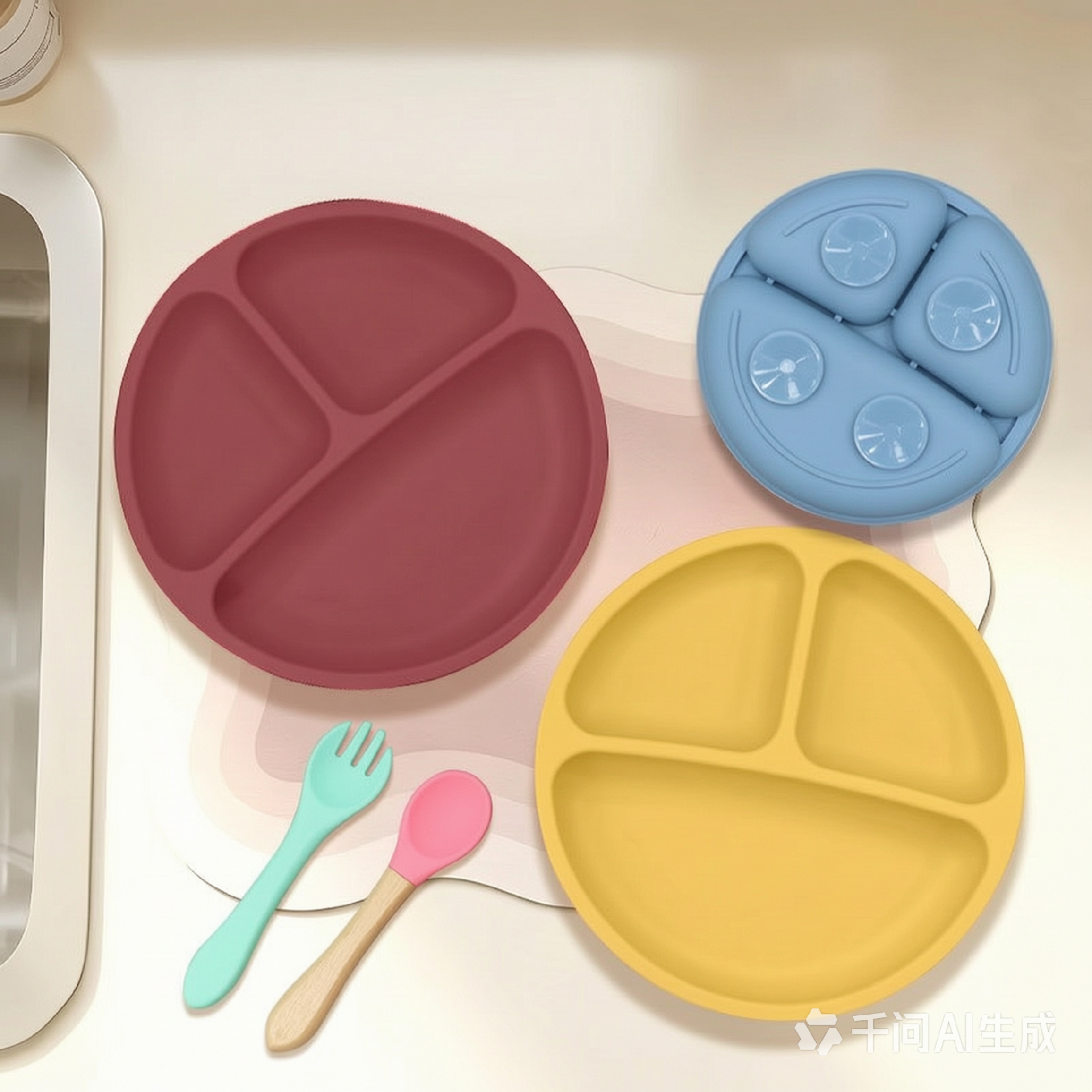
The suction base is the first thing to examine. A usable base sits flat against a smooth tray and grips without lifting at the edges when a child leans on the plate or pushes against the rim. A thin, overly flexible base loses suction quickly, especially on textured or slightly uneven surfaces. On the sample, press the base down, release the handle, and tilt the plate from several angles to see whether it holds. Check whether the suction ring is molded as one piece with the body or glued on, since a bonded ring can separate after repeated washing.
Material grade matters as much as the grip. The plate should be made of food-grade silicone, and the supplier should be able to provide test reports relevant to the destination market. Any printed pattern, logo or decoration on the surface should be applied so it does not peel, flake or rub off into food. Avoid plates with rough print edges, and rub the decorated area lightly with a damp cloth on the sample to confirm the finish stays intact.
Seams and joins are another weak point worth inspecting. A seamless or smoothly molded body washes more easily and is less likely to trap residue in a crack. If the design uses a two-part construction, look for clean, even seams with no visible flash or loose edges. Compartments should be deep enough to hold separate foods, but not so narrow that a brush cannot reach the corners. Compare the rim, weight and wall thickness: a plate that is too thin bends under a spoon, while an overly stiff plate is harder for small hands and caregivers to lift.
Size and capacity should match the intended age group and meal type. A plate for toddlers needs enough room for a main portion and sides, while a snack plate can be smaller and lighter. Confirm whether the product stacks with other tableware in the set, and whether it fits the typical high-chair trays sold in the target market. Temperature resistance, dishwasher suitability and whether the plate can go in a microwave should all be confirmed against the supplier's material data rather than assumed.
For private label orders, review branding placement, packaging and accessory options early. Decide whether the plate sells alone or as a set with suction bowls, utensils or a bib, and confirm whether any gift box or hanging card is required. Age grading, warnings and safety documentation should be checked for the market the product will enter. Request samples and test suction strength, washability, edge finish and print durability before approving a bulk run, and keep the approved sample on file to compare later production batches against.